This morning is full of questions. Will we go to the parent meeting at Yohane School, or will that just whet the parents appetites and make them question why the school doesn't have people like us full time? Will the multiple train change to visit Tomo's family outside of Tokyo be possible for inexperienced travelers? What exactly are we doing after the 19th? Will we be able to meet Yoshie? What about Alan? And what will happen right before our departure? Also, we need a new suitcase to fit all the kimonos and pottery that we have been given. Can we find a used suitcase store without spending a stupid amount of time on the task? All these questions plague the mind. In the mean time, Camilla and Yayoi are out buying bread and I just finished all the blog posts below. In a few weeks, I might post some pertinent photos to go with the posts, but for now, it's up to date.
We got on the train to old Kyoto and spent the afternoon trotting around temples. First we went to Sanjusan, a Buddhist temple with a THOUSAND gilt wooden Buddhas guarding some wooden statues in a dark, long building. It was a bit overwhelming. A cool thing for me was how similar the experience was to Catholic cathedrals. Here, too, people lit candles, dropped coins into slots, prayed to saints, and had rosaries. After the temple, we walked the grounds, which oodled with shrines, wells, raked gardens, and fresh orange paint.
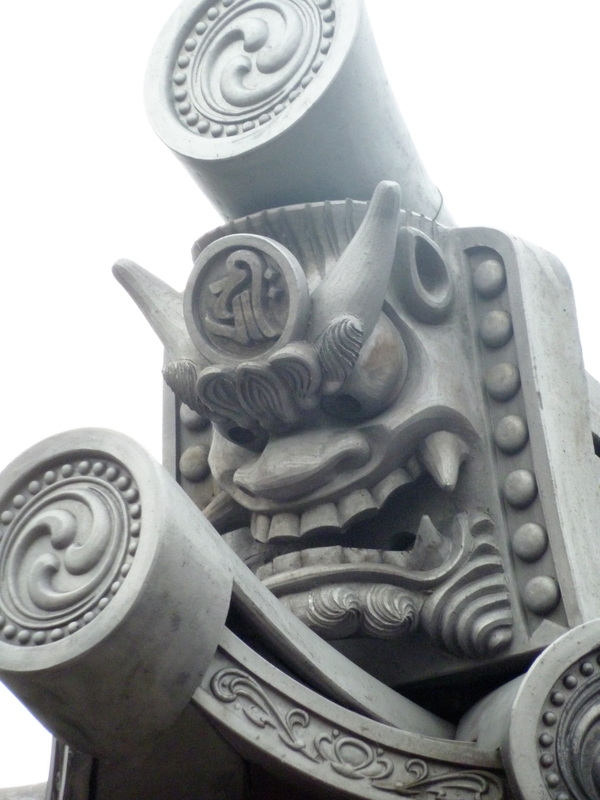
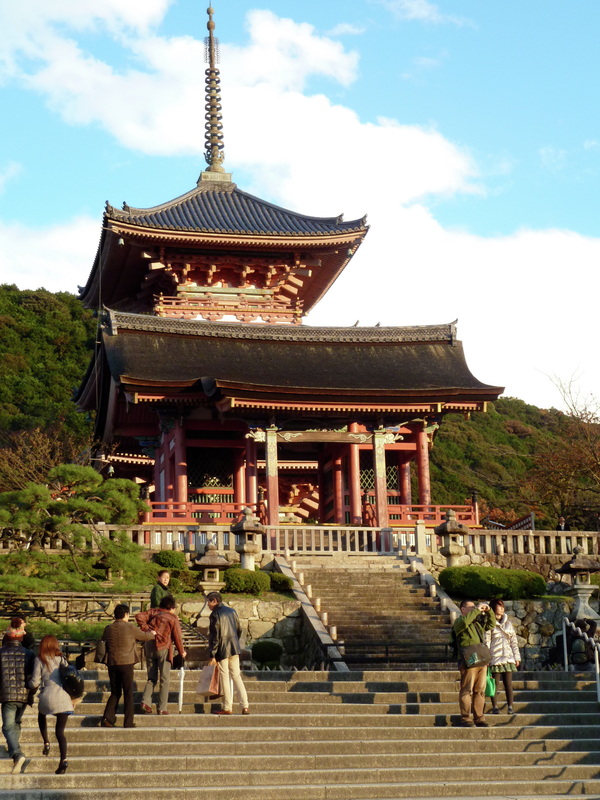
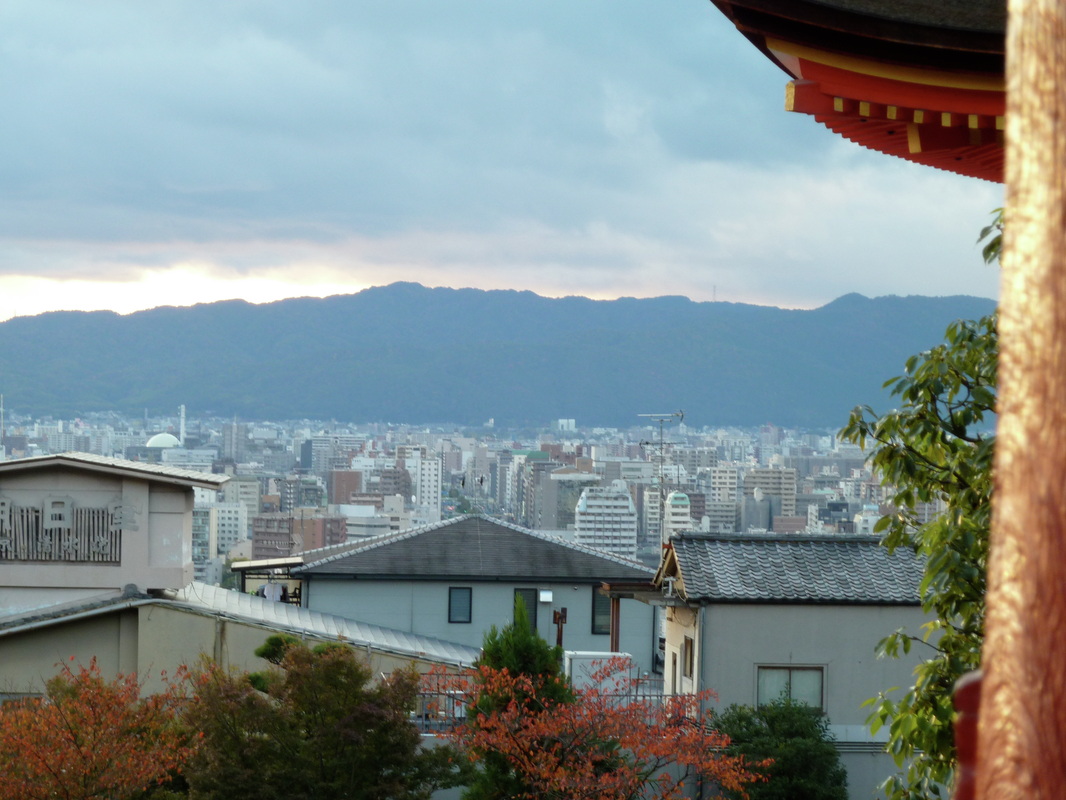
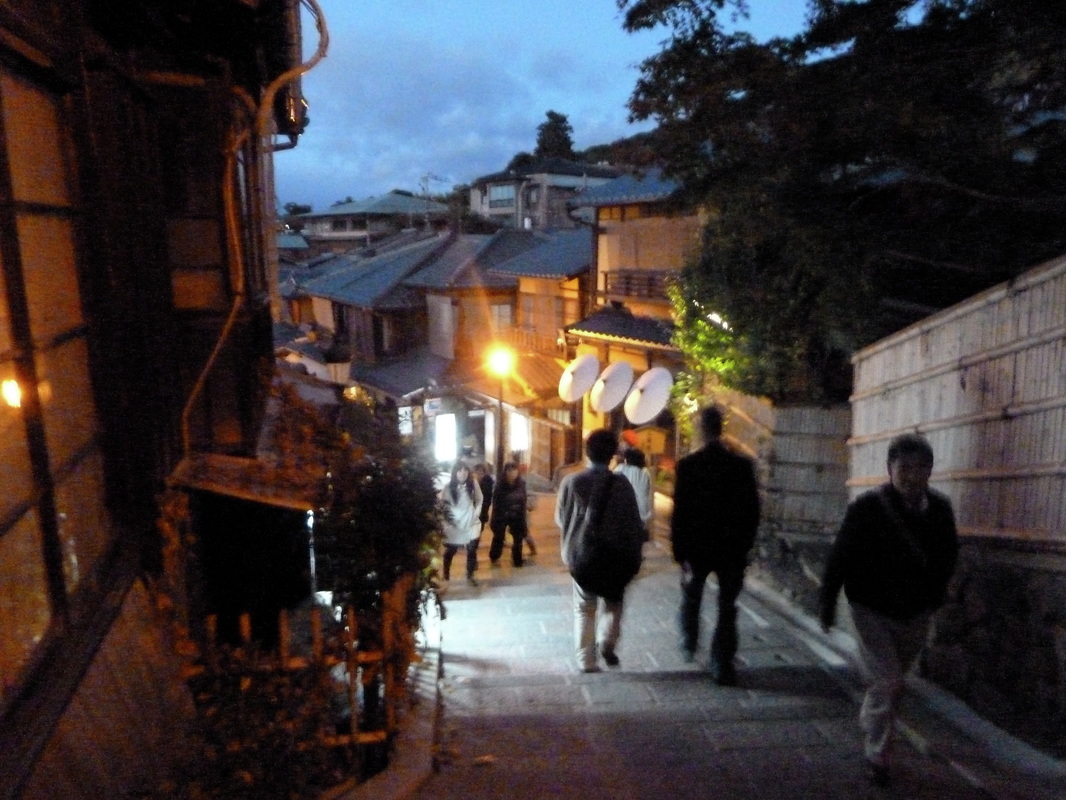
After blah noodles at an udon place, we climbed steep stairs lined with tourist shops to a huge temple complex. I was strongly reminded of the climb to the Sacre Coueur cathedral in Paris, with much the same shops and pilgrims who spent equal time on prayers and trinkets. Ornate pagodas, shrines, temples, and a stage crowded the area. There was a big brass pot you could pray at, and bang with a deliciously resonating effect. Lots of photos, lots of people, lots of happiness. Most of the people looked quite pleased, as did we. Something about the group feeling of pilgrimage, I guess.
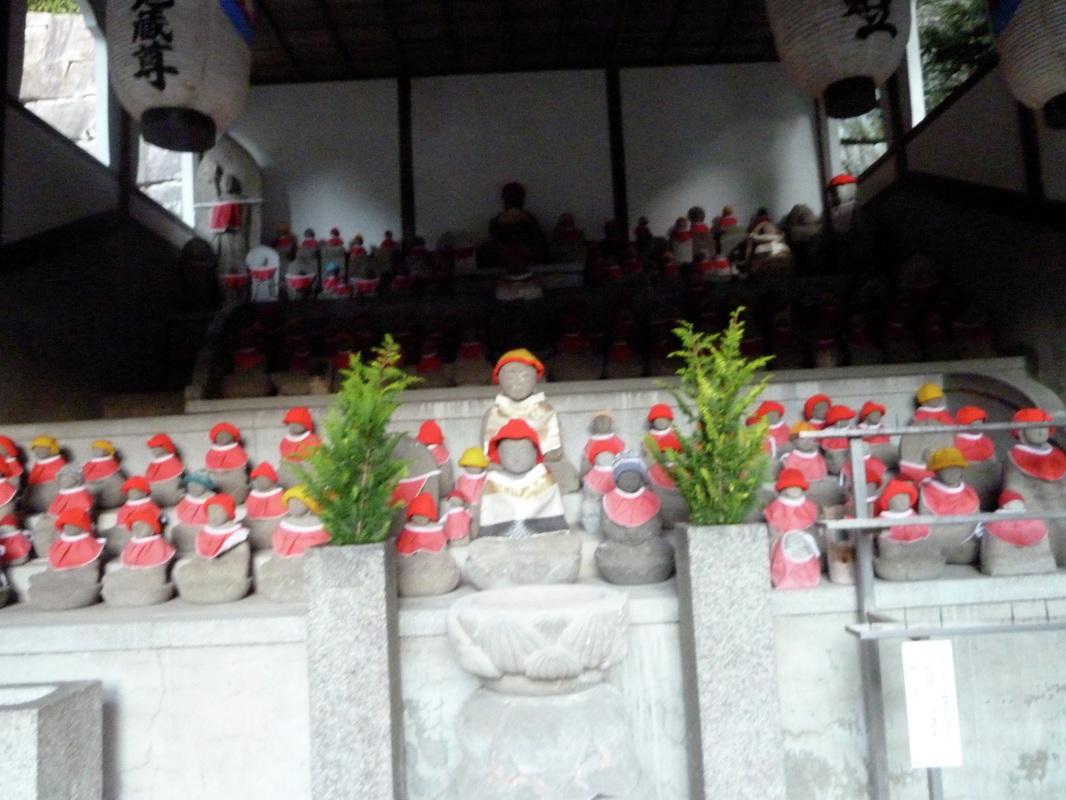
In amongst the larger buildings, there were tiny shrines, guarded by kitsune foxes or stones. There was a hillside with wooden sticks with writing on them, marking donated cherry blossom trees. There was a shrine where people had left stones on all available surfaces. There was a shrine where you washed your hands with water collected from streams of water coming off the roof. There was a shrine with a row of stones clad in red hats and red aprons. It was a busy and very satisfying kind of religious place.
In the midst of this the zipper on my purse exploded and I spent some angst trying to keep my camera, wallet, and sketchbook from falling out. I don't think there are that many pickpockets here, but still, you don't want to be stupid. We ended up at a canvas purse store, run by one of three brothers who learned their trade from their father. They had different ideas about how to design their product, so now there are three stores, each pretty appealing, and to an unfamiliar eye, not much different. Anyway, the one I settled on is a capacious bag suitable for carrying the kitchen sink along with the camera, wallet, sketchbook, other sketchbook, pencils, and fingerless gloves that I take with me.
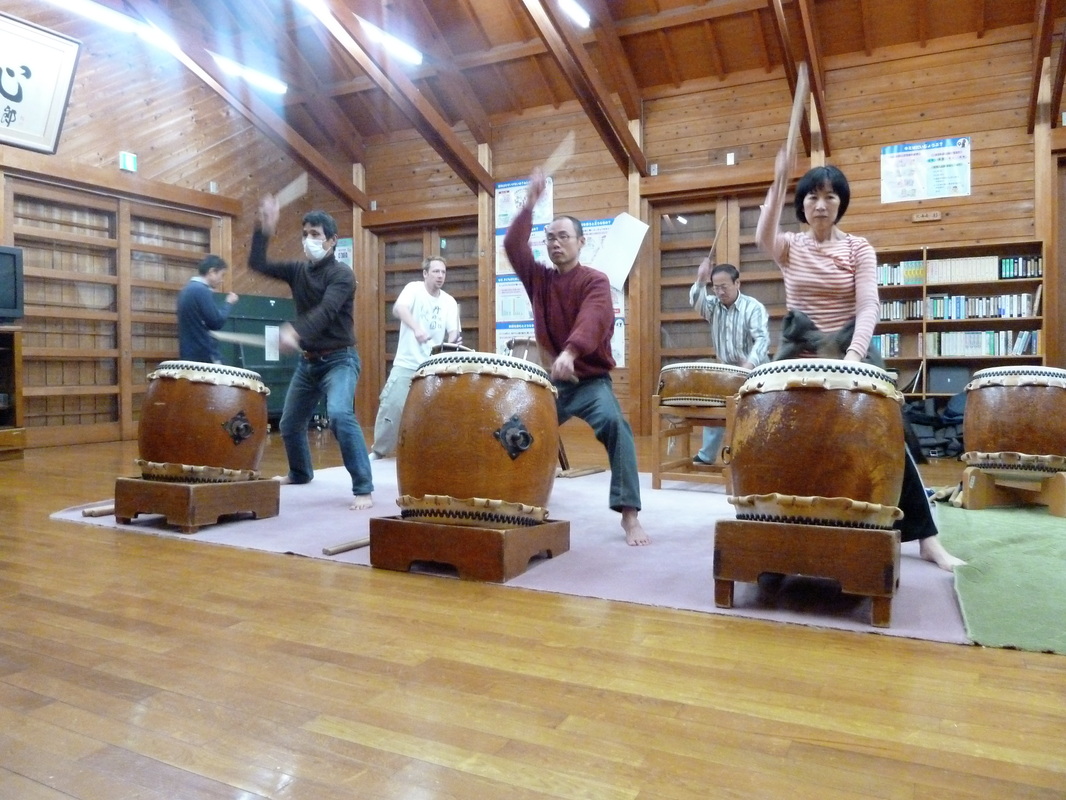
We rushed to the bus, from it to the train, and from the train to the grocery store, where we bought grapes and met Jason. He took us to his weekly taiko drum practice. Here is a link, not of this group, that gives a flavor. I'll replace it with my own clip when I get back to the States. Jason's group is run by the soy sauce guy we met yesterday. He is a stickler for doing it right. The effect is that of a martial art. They really pound on the drums, using dramatic gestures. After a 20 minute performance, so loud our ribcages rattled, we were invited to try as well.
You hold the stick straight up, then let gravity bring it down and at the last minute, flick your wrist and slam it down on the center of the drum. Soft or faster strokes start from closer to the drum. Camilla, Yayoi, and I learned not only the 8, 4, and 2 beat rhythms, but also a delicious 5-beat one, and then we got to learn the first part of one of the pieces they do. After a half hour of some really serious drum whacking, we were out of breath and our arms were sore. A great workout, and quite satisfying because of the sound, the vibration, and the group high.
Afterwards, we all sat around drinking tea, eating the special black soybeans, and talking about Camilla's education, which, as you might imagine, is inconceivable around here.
We drove home, stopped at a 7-11 to get green tea and pumpkin ice cream, and hung around chatting over ice cream and persimmons. Good night!
We got on the train to old Kyoto and spent the afternoon trotting around temples. First we went to Sanjusan, a Buddhist temple with a THOUSAND gilt wooden Buddhas guarding some wooden statues in a dark, long building. It was a bit overwhelming. A cool thing for me was how similar the experience was to Catholic cathedrals. Here, too, people lit candles, dropped coins into slots, prayed to saints, and had rosaries. After the temple, we walked the grounds, which oodled with shrines, wells, raked gardens, and fresh orange paint.
After blah noodles at an udon place, we climbed steep stairs lined with tourist shops to a huge temple complex. I was strongly reminded of the climb to the Sacre Coueur cathedral in Paris, with much the same shops and pilgrims who spent equal time on prayers and trinkets. Ornate pagodas, shrines, temples, and a stage crowded the area. There was a big brass pot you could pray at, and bang with a deliciously resonating effect. Lots of photos, lots of people, lots of happiness. Most of the people looked quite pleased, as did we. Something about the group feeling of pilgrimage, I guess.
In amongst the larger buildings, there were tiny shrines, guarded by kitsune foxes or stones. There was a hillside with wooden sticks with writing on them, marking donated cherry blossom trees. There was a shrine where people had left stones on all available surfaces. There was a shrine where you washed your hands with water collected from streams of water coming off the roof. There was a shrine with a row of stones clad in red hats and red aprons. It was a busy and very satisfying kind of religious place.
In the midst of this the zipper on my purse exploded and I spent some angst trying to keep my camera, wallet, and sketchbook from falling out. I don't think there are that many pickpockets here, but still, you don't want to be stupid. We ended up at a canvas purse store, run by one of three brothers who learned their trade from their father. They had different ideas about how to design their product, so now there are three stores, each pretty appealing, and to an unfamiliar eye, not much different. Anyway, the one I settled on is a capacious bag suitable for carrying the kitchen sink along with the camera, wallet, sketchbook, other sketchbook, pencils, and fingerless gloves that I take with me.
We rushed to the bus, from it to the train, and from the train to the grocery store, where we bought grapes and met Jason. He took us to his weekly taiko drum practice. Here is a link, not of this group, that gives a flavor. I'll replace it with my own clip when I get back to the States. Jason's group is run by the soy sauce guy we met yesterday. He is a stickler for doing it right. The effect is that of a martial art. They really pound on the drums, using dramatic gestures. After a 20 minute performance, so loud our ribcages rattled, we were invited to try as well.
You hold the stick straight up, then let gravity bring it down and at the last minute, flick your wrist and slam it down on the center of the drum. Soft or faster strokes start from closer to the drum. Camilla, Yayoi, and I learned not only the 8, 4, and 2 beat rhythms, but also a delicious 5-beat one, and then we got to learn the first part of one of the pieces they do. After a half hour of some really serious drum whacking, we were out of breath and our arms were sore. A great workout, and quite satisfying because of the sound, the vibration, and the group high.
Afterwards, we all sat around drinking tea, eating the special black soybeans, and talking about Camilla's education, which, as you might imagine, is inconceivable around here.
We drove home, stopped at a 7-11 to get green tea and pumpkin ice cream, and hung around chatting over ice cream and persimmons. Good night!




 RSS Feed
